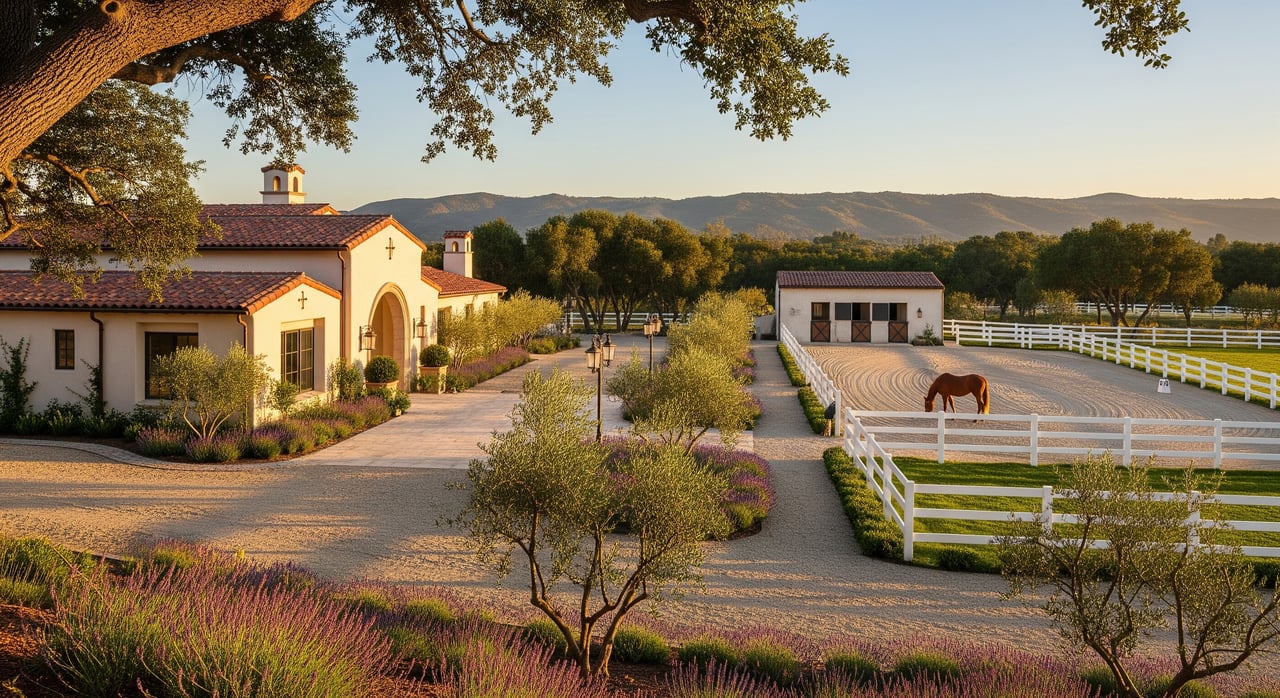
Picture your morning ride starting from your own barn, then connecting to miles of local trails a few minutes from the coast. If you are exploring equestrian property in Rancho Santa Fe, you probably want privacy, space, and a facility that works for both horses and people. This guide shows you what to look for on tours, which rules and risks matter most, and how to plan a smart purchase in this unique market. You will leave with a clear checklist tailored to Rancho Santa Fe. Let’s dive in.
Why Rancho Santa Fe for horses
Rancho Santa Fe is known for large lots, quiet roads, and an established horse culture. Many properties sit within the historic Covenant, which emphasizes rural character and a maintained trail system. The result is a community where equestrian living is expected and supported.
Compared with other North County areas, Rancho Santa Fe often commands a higher price per acre, especially when a property includes purpose-built barns, arenas, and irrigated paddocks. That premium reflects location, privacy, and governance that helps preserve the area’s character. Before you tour, review the Rancho Santa Fe Association resources to understand how CC&Rs and trail policies can shape daily horse use.
What to evaluate on property tours
Usable acreage vs acres on paper
Not all acres are equal. Focus on usable land for horses, including slope, drainage, soil stability, fenced paddocks, and any irrigated pasture. As a practical range, many private owners can manage about 1 to 2 acres per horse with dry lots and supplemental feed. If you want true pasture-based grazing in Southern California, plan for roughly 2 to 5 acres per horse depending on irrigation and pasture quality. Local guidance from groups like UC ANR and USDA NRCS can help you plan pasture rotation and forage management.
Barns, stalls, and support buildings
Walk the barn with a safety and workflow mindset. Look for stall size in the common 10×10 to 12×12 range, good ventilation and natural light, roof condition, and solid aisle footing. Confirm dedicated tack and feed storage, a wash rack, and a manure storage area with easy truck access. Keep hay storage separated from stalls for fire safety, and verify that doors and aisles allow safe horse handling.
Arena and turnout facilities
Arena quality drives training time and resale value. Note the footing material, base and drainage, arena size, and whether it is covered or uncovered. Extras like round pens, hot walkers, and safe lunging space add flexibility. Count the number of turnouts and paddocks, and check that cross-fencing supports rotation and rest.
Fencing and gates
Common materials include pipe rail, post and rail, vinyl, and mesh combinations. Evaluate fence height around 4.5 to 5 feet for most horses, post spacing, and overall condition. Trailer-friendly gates are key. Aim for 12 to 14 feet or wider and enough turning radius for easy in-and-out.
Water supply and irrigation
Confirm the potable water source and irrigation capacity. In Rancho Santa Fe, many properties receive service from the Santa Fe Irrigation District, while others rely on private wells. Water availability, meter size, and delivery rates directly affect pasture health and arena maintenance. Ask about irrigation system design, zones, and any water rights or delivery agreements that might be in place.
Utilities, septic, and soil
Many rural properties use septic systems. Verify the septic permit status and capacity relative to both the residence and any barn restrooms or wash drains. The San Diego County Department of Environmental Health can help confirm permits and requirements. Check soil stability and drainage, especially around arenas and paddocks, to identify erosion or ponding that could limit use.
Access, circulation, and trail connections
Look at driveway width, slope, and turning space for loaded trailers. Confirm gate codes and whether emergency vehicles can access barns. If trail access is a priority, ask the seller or agent to identify any direct connections to the local trail system and review the Rancho Santa Fe Association trail resources.
Regulations and risk in Rancho Santa Fe
CC&Rs and Association rules
Many properties fall under RSF Association CC&Rs that control uses, architectural design, fencing, and trail access. These rules may limit commercial boarding or training. Study the Rancho Santa Fe Association materials early and request any neighborhood-specific guidelines.
County zoning and permits
Rancho Santa Fe is in unincorporated San Diego County, so barns, grading, and additions require county permits. If you plan any form of paid boarding or training, confirm allowable uses with San Diego County Planning & Development Services before you assume a property can be used commercially.
Wildfire exposure and evacuation
Wildfire risk is a material factor for insurance and planning. Review state maps for hazard severity and discuss defensible space, ember-resistant construction, and roof and venting details with qualified pros. Start with the state’s Cal Fire fire hazard severity mapping to understand exposure. Evaluate trailer access, multiple exit routes, and onsite water storage for firefighting.
Environmental considerations
Some parcels include riparian areas, wetlands, or protected habitat that limit use or building envelopes. Nutrient runoff and manure management can fall under county water quality best practices. Your due diligence should include a review of site constraints before you plan new structures or expanded turnout.
Insurance and financing
Discuss coverage with an insurer who understands rural properties. Many owners add endorsements for farm property, and those who board or train other people’s horses often carry separate equine liability coverages. For financing, work with lenders who underwrite rural and high-value properties so loan terms fit the unique features of an equestrian estate.
Local services and boarding options
Rancho Santa Fe’s coastal location is a draw, but it can mean fewer large commercial horse facilities within the Covenant. Many owners use a blend of private onsite facilities and nearby boarding or training in other North County communities. Map your short list of essentials, including ambulatory equine veterinarians, large animal hospitals, farriers, hay and bedding suppliers, manure removal services, trailer repair, tack shops, and trainers.
Common boarding options include full board, partial or pasture board, training board, and self-care board. If you plan to board offsite, weigh the tradeoff between a smaller private setup at home and quick access to professional arenas and programs nearby.
Costs and resale considerations
One-time improvements to budget for
Plan for potential arena resurfacing and base work, fencing repair or replacement, irrigation fixes, septic upgrades, and driveway or gate modifications for trailer safety. In higher fire-risk areas, consider water storage tanks, ember-resistant retrofits, and backup power for essential barn systems.
Ongoing annual operating costs
Expect feed and hay, farrier and veterinary care, bedding, pasture management, irrigation and water bills, manure removal, and routine property maintenance. Staffing needs scale with the number of horses and the level of care. A simple two-horse setup will cost far less to operate than a staffed facility with full training programs.
What helps resale
Marketability is strongest when you combine usable acreage, reliable water access, safe fencing, a practical barn and arena layout, and easy trailer access. Overbuilding for a very specialized discipline can narrow your buyer pool. Clear disclosures about CC&Rs, permits, and any operational limits help buyers move forward with confidence.
A practical Rancho Santa Fe buyer checklist
Before you write an offer
- Review RSF Association CC&Rs and trail policies on the Rancho Santa Fe Association site.
- Confirm zoning and permitted uses with San Diego County Planning & Development Services.
- Verify water source, meter size, and irrigation capacity with the Santa Fe Irrigation District or well records.
- Check septic permits with the County Department of Environmental Health.
- Review Cal Fire and county maps for wildfire severity using state resources.
- Request maintenance records for fencing, arena footing, irrigation, hay storage, and manure removal.
- Map nearby vets, farriers, hay suppliers, trainers, and boarding facilities.
Inspections and specialists
- General home and structure inspector with rural and barn experience.
- Equine facility specialist for stalls, ventilation, footing, manure handling, fencing, and gates.
- Soil and drainage review, plus percolation testing if septic expansion is likely.
- Fire safety consultant for defensible space and barn hardening.
- Title and land survey to confirm boundaries, easements, and any trail access points.
Smart questions for the seller
- How many horses have lived here and under what management style.
- Any past or pending CC&R issues related to barns, stables, or fencing.
- History of flooding, erosion, or slope movement in paddock or arena areas.
- Permit records and service contracts for irrigation and arena footing.
- Details on RSF Association dues, district fees, or special assessments.
Work with a local advocate
A great equestrian property balances land, water, layout, rules, and risk. When you have a guide who knows North County, you can focus on what matters most for your horses and your lifestyle. If you are ready to explore Rancho Santa Fe or compare it with nearby options, connect with Karen Morton for local insight, vetted resources, and a calm plan from search to close.
FAQs
How many acres per horse work in Rancho Santa Fe?
- A practical range is 1 to 2 acres per horse for dry lots with supplemental feed, and 2 to 5 acres per horse for pasture-based grazing depending on irrigation and forage quality.
Can I run a boarding or training business on my RSF property?
- Commercial uses are limited in many areas, so confirm allowable uses with the RSF Association CC&Rs and San Diego County Planning & Development Services before you assume boarding or training is permitted.
How does wildfire risk affect horse properties here?
- Wildfire exposure influences insurance, building materials, defensible space, and evacuation planning; review Cal Fire hazard severity resources and design trailer-friendly escape routes.
Is well water common and does it affect pasture planning?
- Some properties rely on private wells while many are on the Santa Fe Irrigation District; water source, meter size, and rates directly impact irrigated pasture and arena maintenance.
What inspections should I order for the barn and arena?
- In addition to a general home inspection, engage an equine facility specialist, a soil and drainage consultant, and a fire safety pro to evaluate stalls, footing, fencing, manure management, and defensible space.